



THEN & NOW: Riot Darkened Atlanta’s Reputation for Racial Peace
The 1906 breakdown in public order led to at least 25 deaths and eventually may have influenced the future of Jews in the community.
Since the Civil Rights era of the 1950s and 1960s, Atlanta has courted economic progress and racial fairness with the now familiar slogan of “A City Too Busy to Hate.” But a in the early years of the 20th century, hate was not far from many of those who had been attracted to the opportunities that life in what was called “The Gate City” offered.

As many local historians have pointed out, racial differences were exploited by the intense rivalry that had developed by the four newspapers that were read in the white community. Lurid stories about Black men attacking white women were frequent. This seething undercurrent came to a head on Saturday, Sept. 22, 1906.
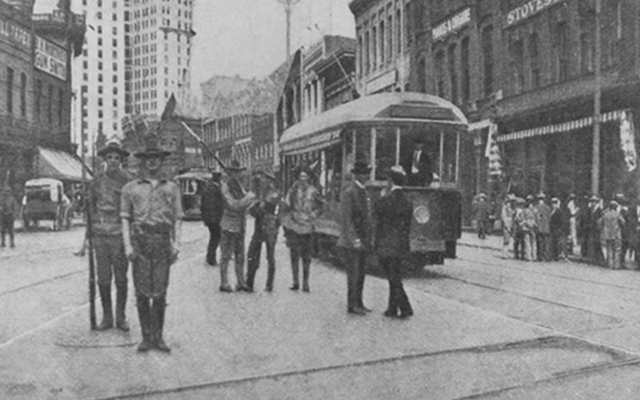
As recounted by the Atlanta History Center, thousands of angry whites massed at the intersection of Pryor and Decatur streets in downtown Atlanta. Despite an attempt by Atlanta Mayor James Woodward to calm the crowd, the mob attacked hundreds of Black residents and vandalized Black-owned businesses in the downtown area.
By Monday, Sept. 24, the central business district was under martial law. At least 25 Black Atlantans were murdered and hundred more were injured as Black businesses and homes were burned or destroyed. Black residents were, in some cases, hung from lampposts and others shot or stabbed to death.
The racial violence in Atlanta was widely noted in the press. In Paris, Le Petit Journal featured a drawing of a rampaging mob attacking numerous Blacks. The international press reports that quickly appeared were not unlike those that appeared after a similar massacre that had occurred in 1903 in the Jewish community of Kishinev in Russia. Photographs taken in Eastern Europe of recently murdered Jews wrapped in white cotton shrouds appeared in major newspapers.
Although the mob violence left a dark shadow across Atlanta history, over the years it was largely forgotten, It was not until 2006 on the 100th anniversary of the rampage that there was a public ceremony here commemorating the attacks.

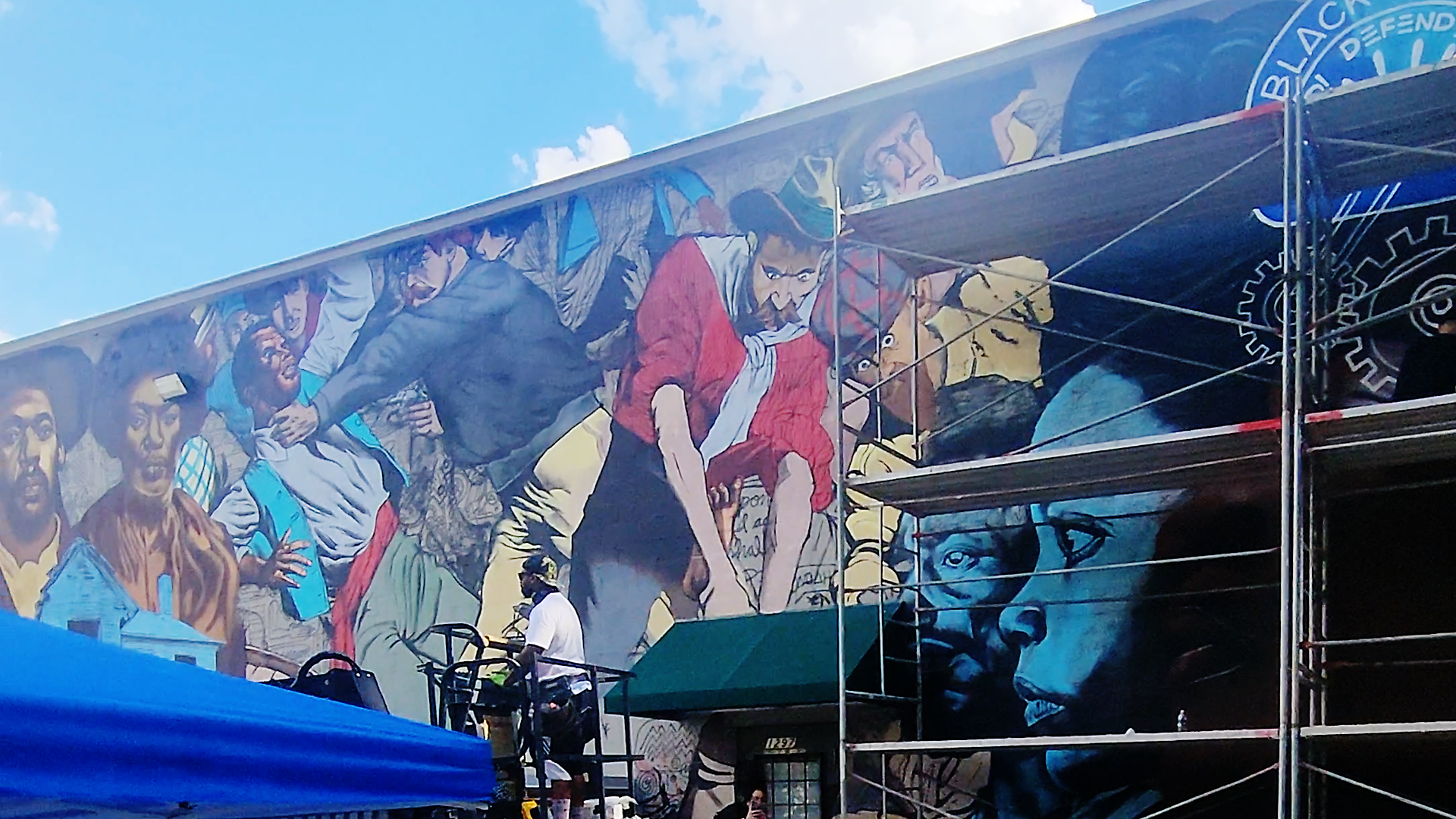
Now the National Center for Civil and Human Rights has unveiled a large-scale mural of the 1906 attacks. It covers one side of a building housing a neighborhood organization on McDonough Boulevard in the Atlanta community of Brownsville, south of downtown.
The area had played an important role in the riot and over the years has remained an important part of Atlanta’s history. The artist, Fabian Williams, took more than 14 months to create the final work, maneuvering through 19 versions of the mural until he was satisfied with the results.
In imagery reminiscent of the French newspaper drawing, the mural shows an angry white mob attacking Black citizens reconstructing a home. Although guns played an important role in the historical event, Williams was asked not to include the weapons in his final version.
The National Center has also developed an immersive mobile app, “1906,” that uses augmented reality to bring the history of the massacre to life. Included in the work are eyewitness and newspaper accounts of the event.
In the aftermath of the event well over a century ago, the civic community took steps to ease Black and white relations. A committee was formed with the participation of Dr. David Marks, rabbi of The Temple in Atlanta, to take steps to ensure that what had happened on the streets of the city over those several days would not reoccur.
One of the most sensational of the city’s newspapers, the Atlanta Evening News, was forced to close. Dialogue between leaders of each racial community was stepped up. The riot was one of the reasons the National Association for the Advancement of Colored People was formed in 1909.

But tension persisted because many of the conditions that had led to the riot remained. Blacks remained an underclass, seen with suspicion and disdain by their white neighbors, tensions continued to run high as Atlanta transitioned from a largely agricultural economy to an industrial one. Sensational journalism continued to play on people’s emotions.
As Atlanta’s rapidly growing Jewish community prospered and grew, so did the resentment and antisemitism that bubbled up from time to time.
It could be argued, as some historians have, that the 1906 race riot can be linked to the trial and conviction of Leo Frank seven years later. It also was influenced by sensational newspaper accounts that played up the sexual overtones in the murder of 13-year-old Mary Phagan.
Just as how the race riot had led to the violent death and even lynching of Black men, so Leo Frank who was convicted of Phagan’s murder was taken from his prison cell by a vengeful white mob. He, too, was finally hung from a large tree in a publicly celebrated crime in 1915 that had repercussions for decades.
comments