



‘Come From Away’ Features Local Connection
There’s still time to see this play that reaffirms our world is blessed by the kindness of strangers.
After 37 years with the Atlanta Journal-Constitution and now with the AJT, , Jaffe’s focus is lifestyle, art, dining, fashion, and community events with emphasis on Jewish movers and shakers.
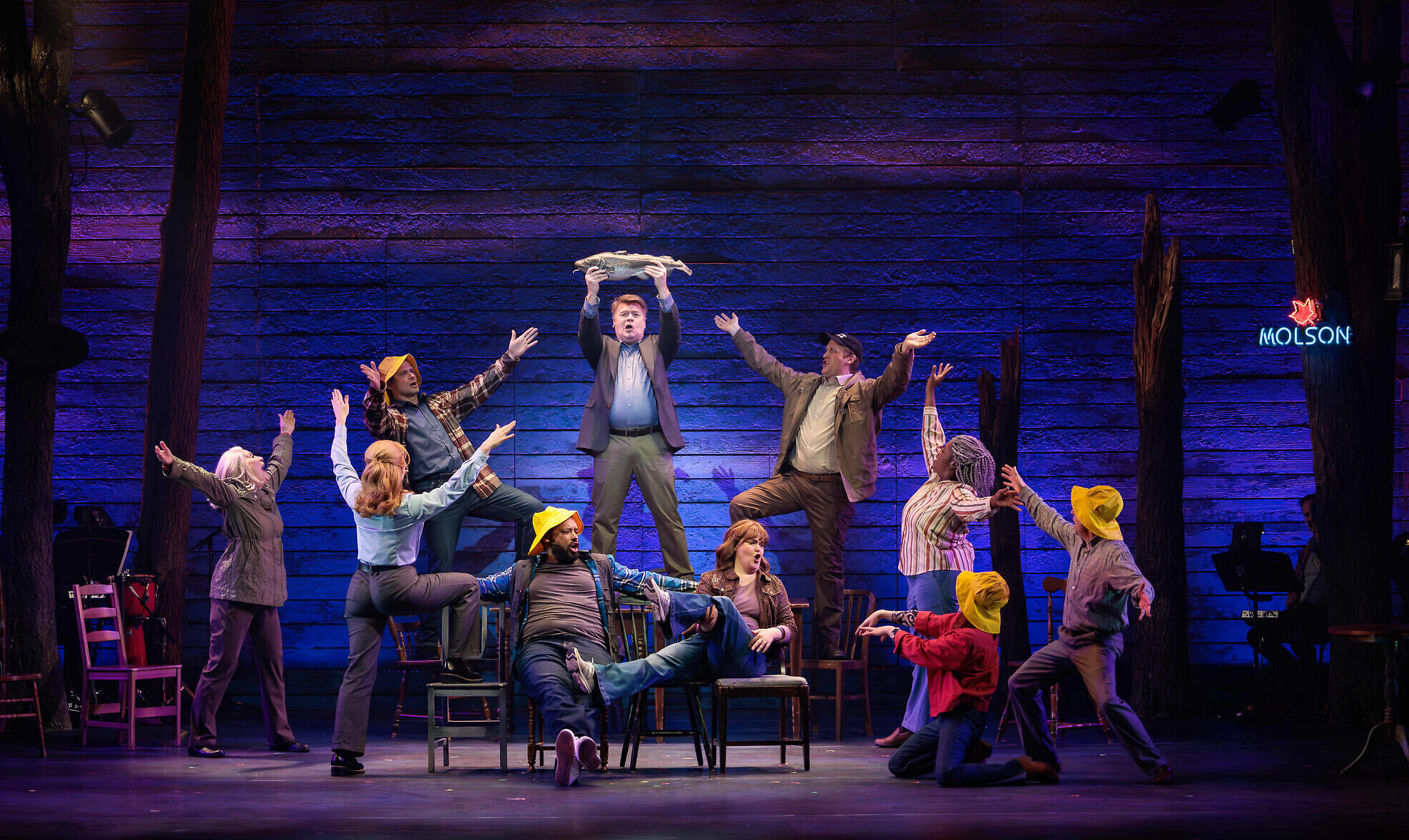
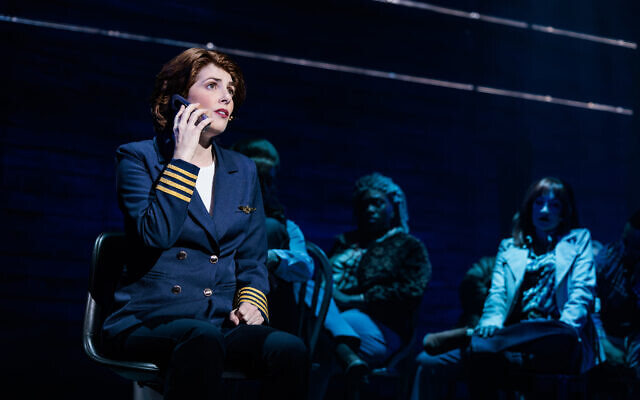
“Come From Away” is a true heartwarming story of a small village in Newfoundland that welcomed more than 7,000 stranded airline passengers on 9/11, doubling the town’s population.

The denouement unravels as the close-ups of just a few of the disparate and desperate passengers learn about the kindness of strangers. “From away” those passengers came in varying genders, races, religions, and marital statuses, including a religious rabbi who was set up in a private kitchen to keep kosher, not to mention the “ark-like” circumstance of an animal rescuer/passenger tending to the cages of cats, a dog, and a pregnant monkey.
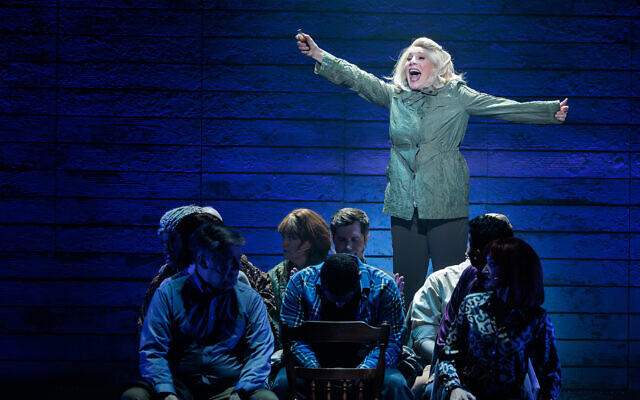
Be prepared for some adjusting to one actor playing multiple roles in addition to the on-and-off Canadian intonations. “Come From Away” is playing through March 29 at the Byers Theatre at the Sandy Springs Performing Arts Center presented by City Springs Theatre Company.
As term “happily ever after’ so evenly applies, the plays provides a sense of closure, establishing a new normal for trust and the true goodness of humanity. The audience unravels the plot complexities of “what would I do” … if they were the pilot, a passenger with pressing matters back home, or as residents who choose to open their homes to any number of strangers, who might need diapers or share rare whiskey.
In terms of past stage grand executions in performances like “Ragtime,” “Music Man,” and “The Producers,” City Springs Theatre Company is known for grandiose Broadway-worthy wizardry. Here much is done with moderate fanfare in a central stage flanked by trees. The audience is taken from the plane’s aisles, homes, the town meetings, and bars, by the switch of lighting in the blink of an eye. The plane is one such example where the rows are dark, yet overhead lighting expresses a familiar plane setting. In one such scene, veteran performer Courtenay Collins, who also plays Buehla, a townsperson, doubles as a passenger who panics with arms flailing insisting to exit the plane, while others console her. Her gestures are comedic, but maybe not. The passengers don’t know if they will be grounded another five hours, five days or five weeks.
One connecting point is how local couple, Dr. Geoffrey and Marilyn Posner, members of Temple Sinai, were on Delta flight 129 from Ireland when their pilot calmly announced the dire situation. The Posner’s plane was grounded in Canada’s Gander Airport, which has been used for refueling and emergencies since World War II. They ended up in Lewis Porte (population 3,300).

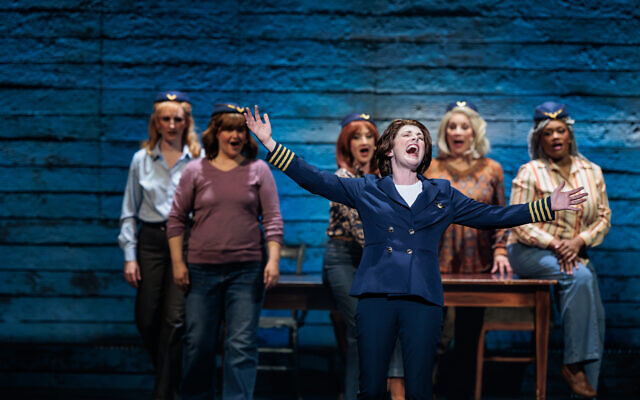
Geoffrey recalled, “There were 350 passengers (Americans and Irish) onboard. Halfway across the Atlantic, our pilot announced that we would be landing in Canada, assured us there was nothing wrong with the plane, and that we would receive updates. As a physician, my initial reaction was, ‘Is there a sick passenger aboard?’ When we landed in Gander, we saw other planes lining up. Our pilot told us that the Pentagon and Twin Towers had been hit. Everything was minute to minute. People with family in Manhattan were crying and praying when we were told that an estimated 30,000 people were killed.” That figure was later revised.
Marilyn added, “Since there were 37 planes, we all went to various towns (by school bus) to a large building. We had three meals a day prepared by the townspeople in the facility’s large kitchen.”
Note that part of the play focuses on concurrent bad luck that the local bus drivers were on strike. Again, within the kindness realm, they were convinced to resume for this time period.
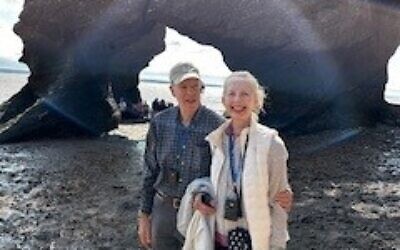
The passengers held a reunion years later in Gander where they raised money for scholarships, in addition to donations after returning home.
Coincidentally, Gander had a Jewish mayor. The first day, an inquiry was made for special meal requests. Kosher and other diets were accommodated. A scene in the play portrayed “rabbi” actor, Lowery Brown.
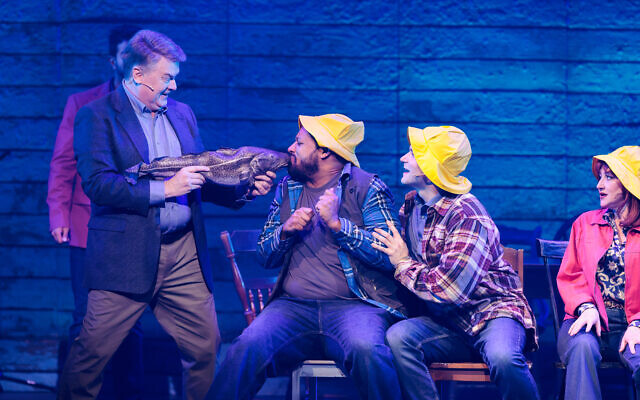
Marilyn concluded, “The world changed after 9/11. There is natural goodness in humanity. In a crisis, people came forward. The townspeople wept as we were leaving. They were preparing a fish fry that afternoon.”
The play was scripted by a Jewish couple, David Hein and Irene Seinkoff.
comments