



Down on the Farm … and Treating PTSD
Ruca's Farm, located approximately 30 minutes south of Tel Aviv, treats IDF soldiers recovering from PTSD as well as family members who are dealing with similar traumatic effects.
Sasha Heller is the Web Editor and Copy Editor for the Atlanta Jewish Times
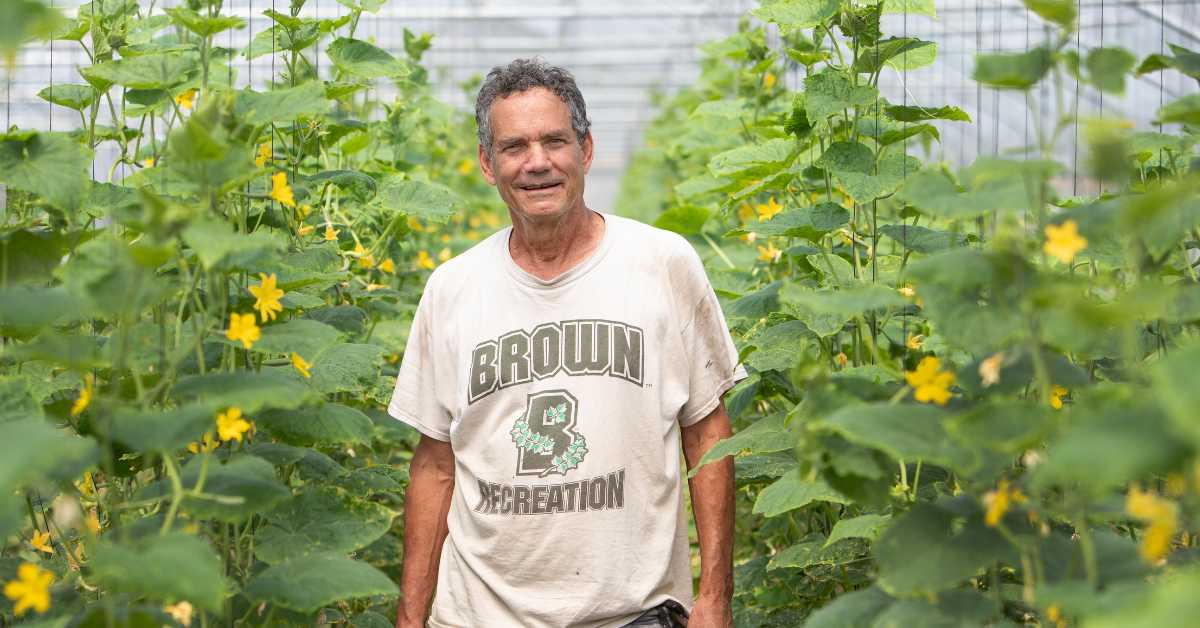
Nir Lahav always knew he was going to be a farmer in Israel. He was raised on a kibbutz and always maintained a spiritual connection to his homeland.

However, he could have never known that he would one day found a rehabilitative farming community comprised of former IDF soldiers, their families, psychiatrists, social workers, and volunteers that would serve as a bastion for those struggling with Post-Traumatic Stress Disorder (PTSD), offering a peaceful and serene environment to tackle mental health issues while also enriching a connection to Mother Nature and Israel.
“Farming was a very big part of my life,” Lahav said. “Being outside on the land is very therapeutic. And I knew it’s social, helping others.”
Ruca’s Farm is named after Nir’s mother, Ruca, who was born in Argentina post-World War II in one of the “Jewish Cowboy” colonies that were established to assist Jews in escaping the Nazis.
His mother eventually immigrated to Israel and established a kibbutz as well as a connection with the Jewish State. Ruca’s Farm honors his mother’s legacy.
“The project is remembering the giants, the idealists, the pioneers who built the country, and have the right values of working the land. We’re trying to walk in their huge steps.”

In 2021, with the idea of founding Ruca’s Farm, Lahav selected a location in the south that was relatively close to metro areas. The land was donated and when Lahav’s new neighbor found out about the plan for the farm, the neighbor also donated land, bringing the total area to five acres.
Lahav had no intention of making the operation for profit.
“Some people say it’s in the stars … but I made a decision,” he said. “I sat with my wife, and she supported that I am now going to do it as a volunteer project.”
Originally, the idea was to take in older Ethiopian immigrants. However, when Lahav met with a friend who was involved with PTSD treatment, the vision for the farm evolved.
Construction began in November 2022 as they built the farm, greenhouse, dining hall, and rooms for social workers and treatment.
On Jan. 15, 2024, Ruca’s Farm accepted its first cohort of eight IDF veterans struggling with PTSD. Since then, they have treated 24 cohorts and approximately 250 vets. Each cohort lasts 10 weeks with clients coming to the farm one day per week for nine hours. The mornings consist of working outside, either in agriculture or with the farm’s beehives. In the afternoons, the clients meet with social workers and mental health professionals for treatment. Yoga and acupuncture are also offered.
“We are trying to provide tools for a normative life,” said Lahav. “PTSD does not go away. The good news is you can live with it until 120 – a normative life.”
Ruca’s Farm offers multiple treatment tracks: veterans with PTSD; spouses of veterans with PTSD; group sessions for couples; and veterans without PTSD who need help adjusting after their service ends.
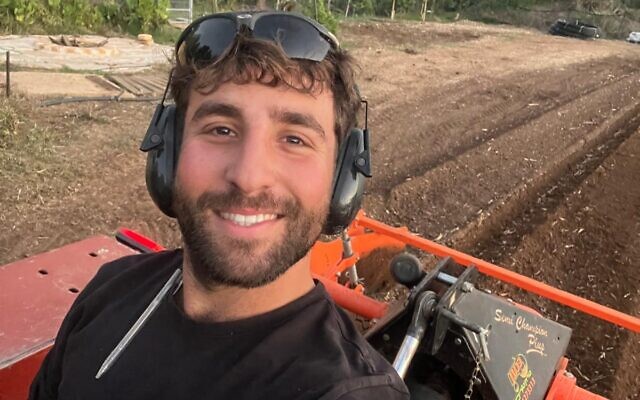
To Hell and Back
Yotam Babash, 24, in his words, had a typical childhood in Tel Aviv.
“I was a normal kid, from a good home and nice neighborhood,” he said.
Babash originally studied in the Navy but decided he wanted to serve in the Armored Corps instead.
“I wanted to be in the tanks in the desert,” he said, so he completed basic training in the tank brigade. He later completed the commander and officer course and was assigned as platoon commander.
His platoon had been stationed near the Gaza border since August 2023, approximately halfway between the site of the Nova music festival and Kibbutz Be’eri. On Oct. 7, his life would change forever as Hamas executed its coordinated attacks on the festival and multiple kibbutzes across Israel.
Babash shared, “We weren’t surprised that it started but we surprised at the scale.”
During the attack, Babash was in the platoon’s tank with fellow soldiers when a drone dropped a hand grenade from above and blew up the front of the tank.
“I could see from inside the tank that the outside was covered in flames and the tank was destroyed,” he said. “But we had to keep fighting because of the terrorists.”
Babash and his unit defended themselves with guns and cannons for two hours, killing more than 100 attackers. However, half his platoon would perish.
At 8:14 a.m., he decided to abandon the tank and aimed to migrate five kilometers to Kibbutz Be’eri. Along the way, Babash realized he was not going to reach the kibbutz safely, so he found a spot near a river and hid with a few of his unit members in a set of bushy eucalyptus trees.
I could see from inside the tank that the outside was covered in flames and the tank was destroyed. But we had to keep fighting because of the terrorists.
Three hours later, a fellow soldier operating a tank found Babash and picked him up. As they drove through Kibbutz Sa’ad, they fought off terrorists and ended up saving the community.
By 2 p.m., they had made it to the Nova festival site.
“No one was alive,” he said. “Everything was burned, melted cars.”
Something broke in Yotam that day.
After a couple of months, Babash’s commander recognized he was struggling with his mental health, so he was referred to observation where he was diagnosed with PTSD. Babash didn’t want to see uniforms as he had lost half of the soldiers in his unit. After three months of treatment, Babash returned home but he was still not quite right.
“I really felt alone even though I was surrounded by loved ones,” he said, adding that he would stay isolated in his room and his body would shake. “I really didn’t understand what happened to me.”
When Babash found about Ruca’s Farm, he was initially hesitant to continue treatment there. However, with some convincing by his mother, he decided to start volunteering as part of his treatment. He quickly came to appreciate his time there.
“It was so quiet … and fresh air … and everyone was so kind to me,” he said. He returned for a second day a few weeks later and was hooked, realizing it was exactly what he needed to feel “normal” again. Working on the farm helped cure his sleeplessness as he had been overwhelmed by nightmares. Eventually, Babash acquired a license to drive the farm’s tractor and was later named the agriculture manager. His role also expanded to helping integrate new clients onto the farm.
“I really enjoy being there,” he said. “It really saved my life. I feel comfortable and confident and I’m breathing fresh air all day.”
Ruca’s Farm relies heavily on financial donations. There are several ways to support the organization: either via debit card, bank transfer, personal/trust/foundation checks, charity accounts, or gift cards. All donation info can be found via The Good People Fund website: https://www.goodpeoplefund.org/how-can-you-help/mitzvah-donate/; Checks can be mailed to: The Good People Fund 384 Wyoming Ave Millburn, NJ 07041
Please make checks payable to The Good People Fund, with a notation that it is intended for “Ruca’s Farm”; or by Donor Advised Fund (DAF):
The Good People Fund should be registered in your DAF’s platform and can also be searched using the EIN (Employer Identification Number): 26-1887249.
Please have the DAF indicate on the check that the funds are intended for Ruca’s Farm.
For more information about Ruca’s Farm, please visit https://www.goodpeoplefund.org/program/rucas-farm/
comments