



Pinson’s Boards Bring Everyone Together
Itta Pinson has elevated the charcuterie board trend to that of a "grazing experience"… without the pork.
After 37 years with the Atlanta Journal-Constitution and now with the AJT, , Jaffe’s focus is lifestyle, art, dining, fashion, and community events with emphasis on Jewish movers and shakers.

Itta Pinson is definitely “on trend,” establishing her niche in the delicious, creative world of charcuterie boards — with a Jewish twist.

Originally, charcuterie (pronounced shar-KOO-tuh-ree) comes from French: “chair” is “flesh,” and “cuit” is “cooked,” referring specifically to preserving meat, especially pork, usually served alongside cheese. A charcutier was a trained professional who cured, smoked, and prepared meats long before refrigeration existed. Regional tastes developed based on climate and ingredients. Family recipes from inns were passed down generations. Around the turn of the 20th century, the modern evolution of “boards” was accelerated in North America.
Now with her unique culinary skill, Pinson is off and running with artistic palettes where cheese, fruit, nuts, candies, and spreads are added sans pork! The wooden board itself is both practical and aesthetic. Strictly kosher, Pinson said, “I use the term ‘graze boards.’ Arranging a board feels like painting — balancing colors, textures, heights, shapes, and flavors. I love when someone sees a board, and says, ‘This is too pretty to touch.’ That’s always my goal: make it delicious but also make it an experience.”

Boards today appear at dinner parties, weddings, holidays, and wine tastings where they encourage grazing and conversation, rather than formal dining. Dream of crackers, olives, cornichons, pickles, grapes, figs, berries, dried fruit, nuts, honey, jam, mustard, chocolate, and hummus. Think of breakfast or brunch boards, vegetarian or vegan boards, baby shower reveals in all blue … endless possibilities. It’s more about the experience, variety, and visual appeal than strict tradition. Grazing presentations are customizable for diet sensitivity, low-pressure hosting (no cooking), encourage sharing and interaction, combine flavor, texture, and beauty. Their expanse, when done right, comes off as indulgent, yet approachable. The art of grazing boards sits at the intersection of tradition and modern lifestyle. Pinterest is loaded with photos of boards more beautiful than the next. Some say they honor the past while adapting to modern tastes.
Itta grew up in Pasadena, Calif., where her parents are Chabad shluchim, and their house was full of people, holiday meals, events, and constant activity. She explained, “Food was never just something we served — it was how we connected with others. I loved being in the kitchen, arranging things to look pretty, and getting involved in the behind-the-scenes of community events. As events got bigger, I was getting hands-on experience and, by high school, I even had a side business turning food into an experience.”
She moved to Georgia a year-and-a-half ago and restarted her business in Sandy Springs. She offers free local delivery, and her menu includes fresh fruit and veggie platters, dairy graze boxes, and decorative gift boards. Items are all certified kosher pareve, cholov yisroel, pas yisroel, though she is not officially under the AKC hashgacha.

Her process is personalized. “Some know exactly what they want included and others tell me the theme and trust my creativity. I offer different sizes, from simple $25 gift boards to large custom arrangements and full-graze tables. The boards themselves vary — some are wood, some are decorative. Since nobody actually eats the board, the wood doesn’t need to be kosher; the food and treats are placed directly on top and arranged with care, so everything looks inviting and stays perfectly fresh.”
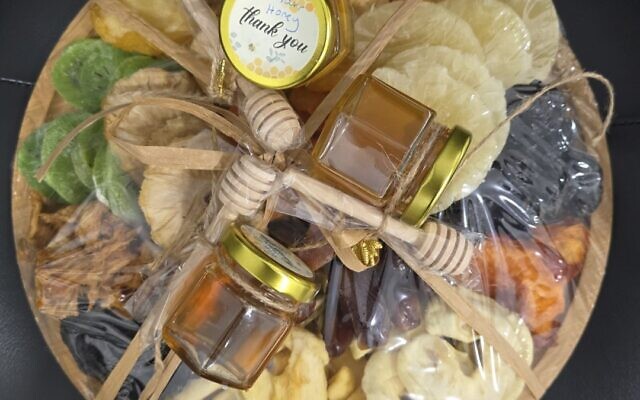
Graze tables are where her creativity comes alive. Much of the food is cloaked in greenery, fresh flowers, candles, and different heights to give dimension. Every table is unique.
She related, “One of my favorites was a Rosh Hashanah table with a honey bar — different flavored honeys, honeycomb — plus the shiv’at haminim woven throughout. These setups become a centerpiece because people don’t just eat from them; they gather around them.”
Holidays are her busiest seasons: Tu B’Shvat boxes, Purim shalach manos at different price points, Rosh Hashanah gifting, Chanukah boards, sometimes even with wine pairings.
“I love that food becomes the way people celebrate and share blessings — it means a lot to be part of that.”
Pinson is a mom of two boys, likes hiking and being outdoors or painting traditionally —without hummus.
For more information, please email delightsbyitta@gmail.com, call 626-399-7613, or find Itta on Instagram @delightsbyitta.
comments