



Udel’s Book Tackles the Quest to Raise a Mensch
Yiddish scholar Miriam Udel examines how modern Yiddish children’s literature shaped the Jewish world.
The recent production of “Fiddler on the Roof” by the Atlanta Opera can be seen not just as a story of a milkman agonizing over the fate of his five daughters, it is also a portrait of a world in which Jews were facing momentous change. Four of the daughters marry and begin their lives anew. But as the curtain drops and the characters march resolutely off the stage, we might ask ourselves, what now?
What is to become of these immigrants, and what is to become of their children? How do they preserve the integrity of their Jewish lives when the world, and particularly their world, is disintegrating?
In the last century, forward-looking Jewish authors and thinkers in Europe and in America were asking these questions with renewed urgency.
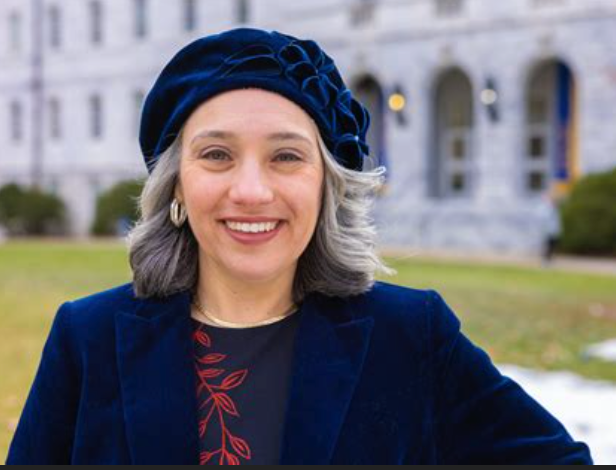
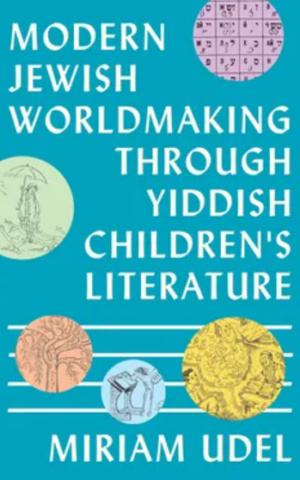
In her book, “Modern Jewish Worldmaking Through Yiddish Children’s Literature,” Miriam Udel, director of the Tam Institute of Jewish Studies at Emory University and a leading scholar of Yiddish language and culture, takes up these questions.
This just published work makes use of the Yiddish literature written for children more than a hundred years ago to examine how the Yiddish speaking Jewish world grappled with the challenges posed by modernity.
“There were a lot of writers in Yiddish who tried their hand at defining a Yiddish nation,” Udel maintains, “as a nation of the spirit, defining the nation through its culture. They, instead, ended up trying to build that nation further through story and through handling children’s symbolic worlds. And that’s where I come to the idea of worldmaking in their writing for children.”

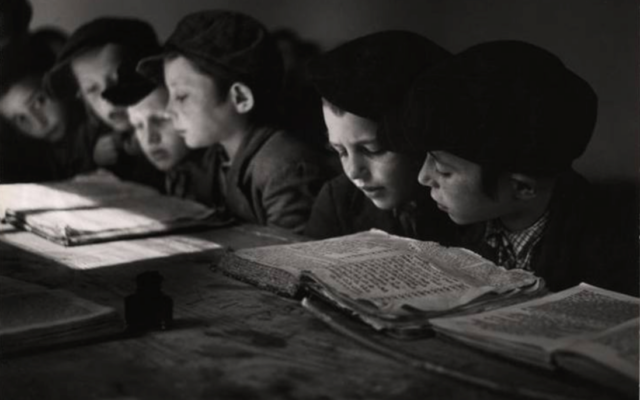
Although many of those writers died in the Holocaust and the military conflicts of the first half of the 20th century, their work lives on in nearly a thousand picture books and collections of stories and poetry written for young people.
“This is really about pulling back the curtain to a time when Yiddish thought of itself as a youthful language that could successfully address the needs of our people. And it’s a really different moment before the Holocaust decimates the speakers of this language, and it’s important, I think, because it opens up an important wellspring to Jewish joy and to Yiddish joy, before all of the heaviness of that loss.”
Although they are mostly forgotten today, these books provided Udel a window into the ambitious attempt to foster a taste for social action and character building among the young. Udel points out that in the upheaval that accompanied so much of modern Jewish life then, there was a concern that Jewish children should learn to live responsibly. There was a concern for social justice and to live like a mensch, as Udel puts it.
“Everyone had a little different idea of what it meant to be a mensch. But the rise of this children’s literature was predicated on the appeal by writers and cultural leaders to children as the repository of a great deal of social, cultural and political capital — an immense reservoir of latent but soon-to-be-realized power.”
She described, for instance, a Yiddish book published 90 years ago in the United States that tells the story of a cute pup who gets adopted by a working class family in The Bronx. It’s the middle of the Depression and the puppy trails along as two of the children in the family encounter a number of pressing social questions; for example, a demonstration by workers demanding better working conditions, and they become part of a demand for the local mayor to do more to help the unemployed. It’s a message that was particularly important then, and, according to Udel, still retains its power today.
“This particular children’s book is absolutely frank in its address to children about the need to address vital political questions and of our shared lives together. And I think that there are some real exemplars for us in the Yiddish world of how to speak to children about those vital matters of political concern.”
Although Udel’s book is a work that is very much rooted at a particular time and a particular place, it is, like “Fiddler,” about the timelessness and universality of so much in our daily lives. The nurturing of responsible young people, Udel reminds us, never stops.
“I think one lesson that I would underscore is that we need to keep open our lines of communication to the many languages in which Jewish life has been lived, including Yiddish. And to always remember that the task of communities, the tasks of parents and educators and just kindly disposed adults is the care and feeding and rearing of a mensch.”
Udel will discuss her new book on a free webcast, Oct. 27, sponsored by the Yivo Institute. Registration at https://yivo.org/Worldmaking
comments