



Mendelow Creates Diabetes Monitoring App
Georgia Tech student Drew Mendelow is making significant advances in coding for a cause.
Robyn Spizman Gerson is a New York Times best-selling author of many books, including “When Words Matter Most.” She is also a communications professional and well-known media personality, having appeared often locally on “Atlanta and Company” and nationally on NBC’s “Today” show. For more information go to www.robynspizman.com.
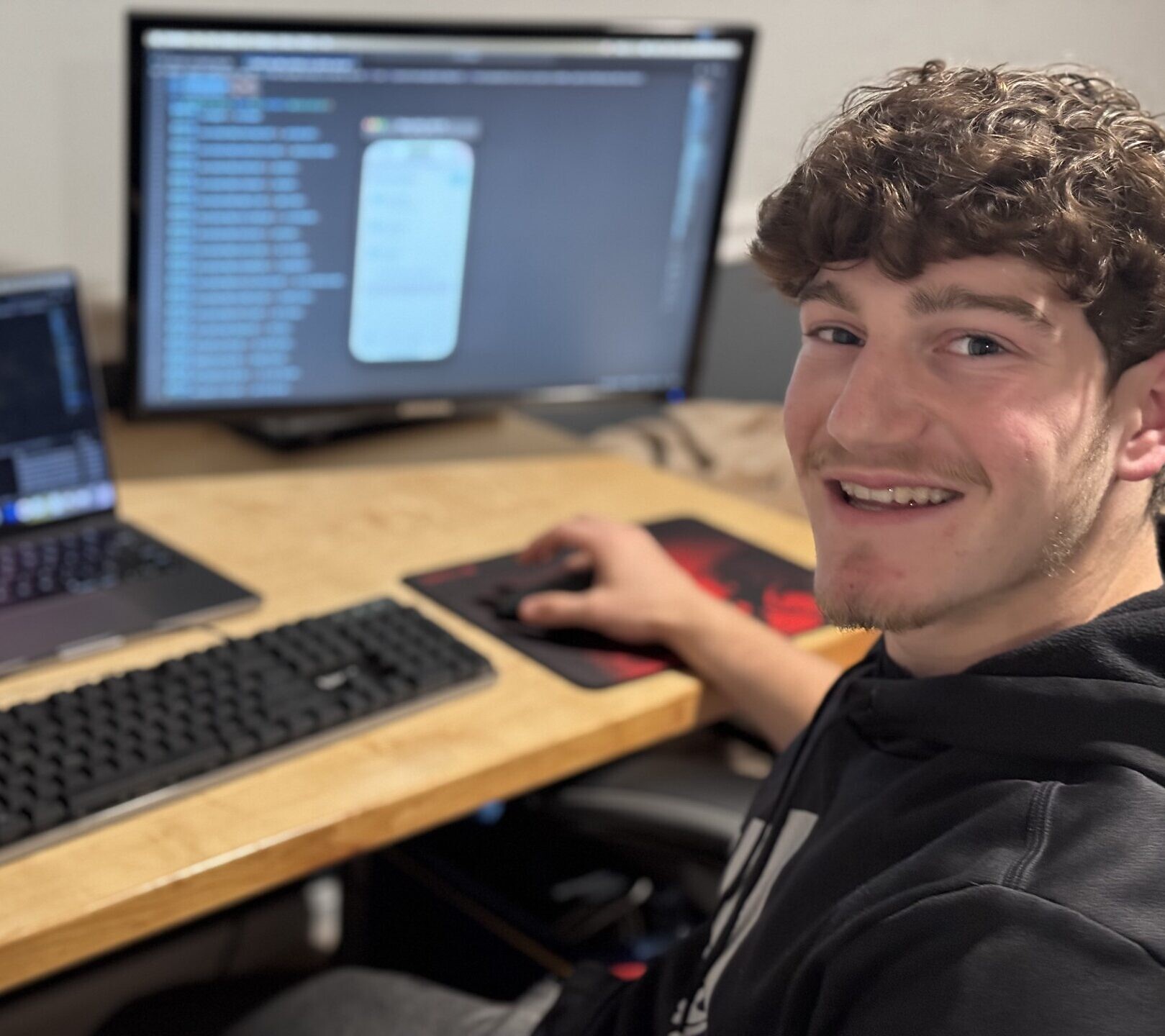
Familiar with coding video games as a hobby, Drew Mendelow believed he could create an app that made managing diabetes easier. He developed T1D1, which is an insulin calculator that allows people to calculate insulin dosages as well as track their blood glucose levels, insulin doses, and carbohydrates.

A freshman at Georgia Tech studying computer science, Mendelow is focused on app development and remains committed to helping others. He grew up in Gaithersburg, Md., and at the age of 13 was diagnosed with Type 1 Diabetes. He designed the app T1D1 which stands for Type 1 from Day 1 diabetes with a clear user-friendly mission in mind. The app has an insulin calculator and allows users to choose different customized settings (e.g. insulin-to-carb ratio) for every meal.
In September of 2020, Mendelow went to the doctor with his mom because he had unexpectedly lost 10 pounds. After seeing that his blood sugar was through the roof, his doctor sent him straight to the hospital where he was diagnosed with Type 1 Diabetes. In the hospital, he was overwhelmed by learning advanced math calculations for insulin dosing and all these terms that he had never heard of before. Naturally, as a 13-year-old, he thought, “there must be an app for that.”
Since there was not anything that met his needs, after being discharged from the hospital, Mendelow was expected to manage this disease on his own. The insulin dosages needed to be just right. He shared, “If I gave myself too much insulin, I could go into a coma or seizure and if I didn’t give myself enough, I could end up back in the hospital with DKA (diabetic ketoacidosis). It was scary to think I was now in charge of my own medical care. The doctors were supportive, but I had to call in all my calculations every day which included my blood sugar levels, amount of carbs eaten, and insulin administered before every meal, snack and bedtime too (about five times per day). I personally created an Excel spreadsheet that I shared with my parents so we could keep track of everything. This is when I realized that there must be a better way.”
Mendelow added, “I joked with the nurse in the hospital that I would create my own app because of my video game coding skills. Over the next month-and-a-half, I worked with my doctor at the hospital and over 70 beta testers to create a fully working insulin calculator. I called it T1D1, which stands for Type 1 from Day 1. I wanted an app that would help other teens in my situation to calculate with confidence and make their lives easier. I remember how distracting it was, sitting in class sometimes thinking about how to manage this disease. T1D1 empowers kids (and their families) to manage this disease. I didn’t want my app to focus on making a profit, it was about making lives easier.”
Learning how to create an app while making T1D1, Mendelow said, “I have some experience with coding video games, but making apps is an entirely different world. I had to learn a new coding language and concepts to begin making T1D1. During COVID, there were many online coding courses available. I completely taught myself how to code video games and apps through YouTube videos and online coding courses. Diving in and creating something hands on was the best way for me to learn.”

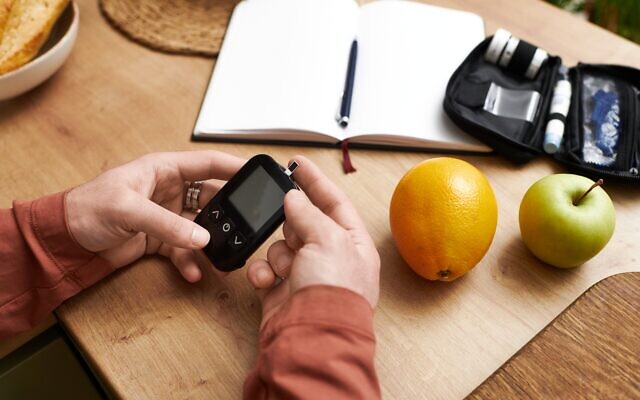
T1D1 is available on iOS and Android phones 100 percent for free. Keeping the app completely free and designed for ages 12-plus was a huge must for Mendelow because he wanted this vital tool to be available to as many people as possible, removing any barriers like cost or access to care.
He said, “The main function of the app is to calculate how much insulin a person should take, using a math formula. The app allows people to track all their logs and easily send them to their medical providers as well. After releasing it, the app gained huge traction with over 45,000 downloads and reaching 74 different countries in the first six months.
“T1D1 is the first FDA-cleared, over-the-counter insulin calculator. T1D1 truly is the only app that is FDA-cleared and available to anyone in the U.S. (I’m working on getting regulations needed to spread globally again) completely for free. Any other similar app allowed you to track Diabetes data but did not have a calculator component. Any hospital required an app to have FDA-clearance before they would feel comfortable recommending it to their patients.”
Mendelow added, “T1D1 is for people on multiple daily injects (MDI), meaning they give themselves insulin through shots every day. I was on MDI for the first six months after I was diagnosed and loved using my app to calculate how much insulin I needed to take around five times per day. However, I got an insulin pump after those six months, which no longer requires me to give myself shots and, therefore, I didn’t need the app anymore. Having been on MDI myself, I can truly appreciate how much burden the app takes off people’s lives, removing some of the stress of Type 1 Diabetes.”
The main function of the app is to calculate how much insulin a person should take, using a math formula. The app allows people to track all their logs and easily send them to their medical providers as well. After releasing it, the app gained huge traction with over 45,000 downloads and reaching 74 different countries in the first six months.
The most rewarding part of the app for Mendelow is the emails of stories that he gets daily showing appreciation for the app. People have shared truly heartwarming stories, like a daughter who could finally sleep over at her grandparents’ house because, with the app, they could now trust that the grandparents would calculate her insulin doses properly. These stories make Mendelow confident that all his hard work over the last five years has paid off, making the lives of countless families just a little easier while managing this disease.
Regarding what is next, Mendelow said, “I’m working on translating the T1D1 app into different languages and getting the regulation required to expand into other countries as well. These both will allow me to remove even more barriers and make the app truly accessible to all (worldwide). I am also starting an internship at Abbott in the Heart Failure Department this upcoming semester and am super excited. I’m continuing my work in the Yellow Jacket Space Program and the Georgia Tech iOS Club. I’m always looking to explore more areas in computer science and am excited to see where my future goes.”
Jonathan Goldman, director, Georgia Tech Quadrant-i, shared “What was unusual about Drew’s entrepreneurial efforts as part of Georgia Tech’s Create-X program was that he had to grapple with getting FDA approval. Analogous to what you would expect when new drugs and medical devices must be approved, Drew’s app had to go through a certification process, since patients will be relying on data delivered by the app, and that can impact health outcomes. While our team at Quadrant-i (https://quadrant-i.gatech.edu/) routinely sees this with the PhD students and faculty who we mentor and assist in helping them with their spinouts, this was definitely unusual to see with an undergraduate entrepreneur and is a testament to Drew’s drive and maturity as an entrepreneur and operator in that program.”
Georgia Tech Quadrant-i Principal Harold Solomon added, “Drew has taken the adversity of his personal story and used it to power innovation and impact. For a U.S. teen to enter a European medical device competition against scientists and entrepreneurs with far more training and experience and do so well, you can’t help but feel he is only beginning on a great journey.”
comments