


New Book Covers How to Treat Pickleball Injuries
Physical therapist and pickleball player Bill Reif aims to share information and keep players safe and healthy.
After 37 years with the Atlanta Journal-Constitution and now with the AJT, , Jaffe’s focus is lifestyle, art, dining, fashion, and community events with emphasis on Jewish movers and shakers.

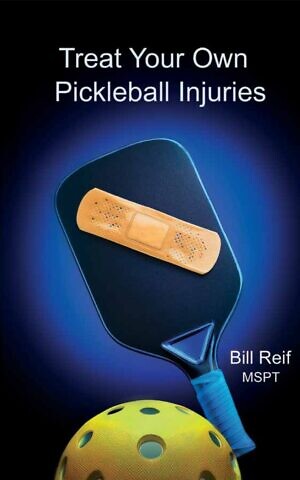
Bill Reif, a physical therapist with 47 years of orthopedic and sports medicine experience, took nine months to write, “Treat Your Own Pickleball Injuries.”

After three days of posting on Amazon, it rose to No. 1 in New Releases. No surprise since more than 19.8 million Americans played pickleball in 2024, a 45 percent increase over 2023. There are approximately 48 million players annually.
It’s also no surprise that $377 million in health care costs accounted for 10 percent of these unplanned medical expenses. Pickleball injuries are often the result of falls, overuse, or sudden movements during play.
Before adding being an author to his resume, Reif earned a master’s degree from Emory University and is the group expert for “Senior Pickleball Tips,” a 100,000-member pickleball community on Facebook. At one time, he had 23 physical therapy clinics throughout Georgia along with several partners.
Now retired, Reif engages in conversations with players of all ages regarding their musculoskeletal complaints. He plays at a club with more than 1,200 members.
He stated, “The friendly nature of the pickleball population enables many to share their injury history as soon as they learn that I’m a physical therapist. Often, they relate a prior history of injury, a pre-existing diagnosis, a work- or sports-related injury or have become de-conditioned due to a sedentary occupation or lifestyle.

Usually, they report a new irritation or pain but choose to play on and hope it would resolve on its own.”
He often gives out simple advice and follows up with illustrations of exercises. In cases where the injury appears to be more involved or unclear, he urges them to get a definitive diagnosis from a physician prior to playing.
He explained that pickleball-related injuries occur most frequently in older people. “Around 60 percent of pickleball injuries are sprains, strains and fractures. Twenty percent are contusions, abrasions, or internal injuries, and fewer than 10 percent are lacerations or dislocations.”
Women are more susceptible to diagnoses such as carpal tunnel syndrome, but the injuries are generally the same in number and type of injury.
Reif’s tip for staying safe:
1: Proper warm-up stretches help prevent straining muscles and helps the body achieve a full range of motion. Warm-ups should last five to 10 minutes. Walking or jogging is a great place to start, followed by arm and leg stretches. Players should also warm up with light hitting at the No Volley Zone (Kitchen) and the baseline.
2: Wear eye protection
3: Never “back pedal” (instead, turn, run, set); back pedal injuries may result in wrist fractures or a blow to the back of the head.
4: Turn to reach a lob and remember that your partner is the preferred player to retrieve the ball when it is directly behind you.
5: If you are already wearing a sleeve, splint, or brace, you must strengthen the underlying muscles, tendons and ligaments, since dependency upon these protections may gradually cause weakness.
If you’re a former tennis, badminton, or table tennis player, you may need to unlearn some of your former technique (such as reducing the long arc swings and dependency on overhead lobs).
6: Do agility warm-ups before playing both static (such as squats and runners stretch), or dynamic, short, quick sprints or repeated jumps.
7: Warm-up stretches help you prevent straining muscles and helps your body achieve full range of motion.
Now volunteering to guide fellow players at Ace Pickleball in Roswell, Lifetime Fitness in Alpharetta, and the Marcus Jewish Community Center of Atlanta, Reif meets new players every week, and plays at several levels, ranging from DUPR 2.5 to 4.0. Sometimes, he plays at a lower level to give his body a rest or to practice a new skill.
Note: Reif’s book is only about the following minor self-treatable injuries: neck pain, back pain, rotator cuff, biceps tendonitis, “Pickleball Elbow,” wrist and hand sprain/strain, knee patellar tendinitis, chondromalacia, hip bursitis, Piriformis Syndrome; Achilles tendonitis, hamstrings and calf strains; plantar fasciitis, and calcaneal bursitis.
“Treat Your Own Pickleball Injuries” contains more than 125 pages of exercises for the 10 most common injuries and is available on Amazon.
- Health and Wellness
- Local
- Marcia Caller Jaffe
- Bill Reif
- Treat Your Own Pickleball Injuries
- Emory University
- Marcus Jewish Community Center of Atlanta
- Ace Pickleball
- wrist and hand sprain/strain
- knee patellar tendinitis
- chondromalacia
- hip bursitis
- Piriformis Syndrome; Achilles tendonitis
- hamstrings and calf strains; plantar fasciitis
- and calcaneal bursitis
comments