



THEN & NOW: Atlanta JCC Continues to Grow & Expand Its Reach
The Marcus Jewish Community Center of Atlanta has come a long way since its founding many decades ago.

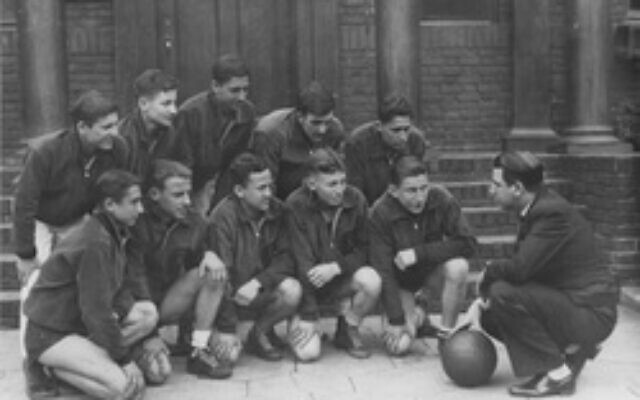
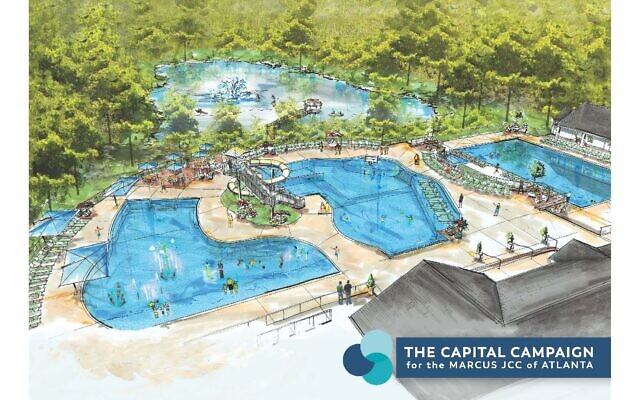
With construction from the Marcus Jewish Community Center of Atlanta’s (MJCCA) 2023 capital campaign coming to an end, the center is now a far cry from the farmland it was a century ago, when the organization that would become the Atlanta JCC was housed in a space far too small for it on Capitol Avenue, near where Turner Field would later stand.

The Jewish Educational Alliance (JEA), formed in 1909 by a merger between the recently formed Young Men’s Hebrew Association and the Free Kindergarten Association, would continue at this location until 1946, when it officially changed its name to the Atlanta JCC, in anticipation of a new building they began fundraising – which itself was not completed until 1956.
The new location on Peachtree Street had only just been completed when real estate mogul Max Kuniansky, then president of the JCC, began looking for an area in the rural farmland of Dunwoody where Jewish kids would have space to play outside the city during the summer heat. To help finance the endeavor, he recruited his friend, Erwin Zaban, and the land was purchased in 1961.
The 1960s were an enormous decade for the JCC. In addition to the purchase of the land that would soon become known as Zaban Park, and the founding of Camp AJECOMCE, the day camp located on the property (now known as Camp Isadore-Alterman), the JCC also purchased and developed land near Cleveland, Ga. – which was dedicated as Camp Barney Medintz in 1963. So many events and developments were occurring at this time that it necessitated a weekly, full-page section of this very paper (then the Southern Israelite), titled simply “AJCC NEWS,” to cover it all.
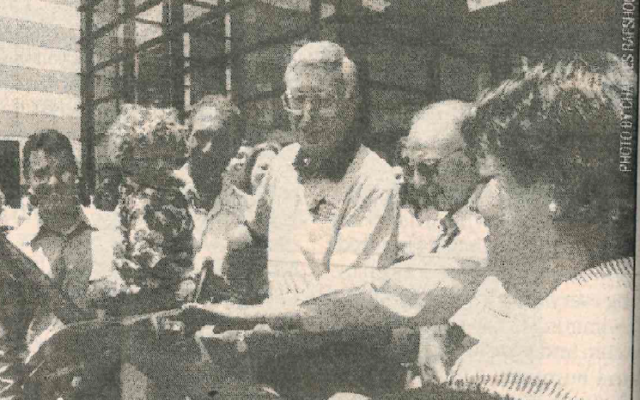
In 1979, the JCC broke ground on a building at Zaban Park. At the ceremony, according to a 2013 AJT article, Zaban was handed a comical award, a rooster in a cage, while everyone else received alarm clocks. Zaban was apparently known for calling very early morning meetings.
The center held the first Atlanta JCC Book Festival in 1992. A very different affair than this year’s book festival, it featured just two authors and was catered only with volunteer-baked cookies.
In 1995, two long-time JCC volunteers, Lisa and Ron Brill, donated $1,000,000 to the JCC’s endowment fund – then the largest endowment gift in the organization’s history. Lisa Brill also became JCC president that year, and closed the Peachtree Street location, formally moving the center to Zaban Park.
It was in 2000, however, after donations from Bernie Marcus and Arthur Blank allowed for significant renovations of the building and grounds, that the Marcus Jewish Community Center of Atlanta found its home in the newly renamed Zaban-Blank building. Crowning this achievement, the JCC Maccabi games were hosted at the MJCCA the next year. A decade later, in 2010, one of the most iconic and spiritual elements of the campus, the Abe Besser Holocaust Memorial – named after the survivor who made the monument possible – was added, and its ner tamid was lit.
Since then, the MJCCA has continued to grow, undergoing several renovations and hosting many events – including another JCC Maccabi games in 2019. As construction funded by the 2023 capital campaign nears completion, reshaping the MJCCA once again, the investments made as recently as this year and as long ago as the 1950s continue to bear fruit for the local Jewish community.
Who knows what we will be remembering in another hundred years?
- Then and Now
- Community
- Robert Garber
- Marcus Jewish Community Center of Atlanta
- Jewish Educational Alliance
- Young Men’s Hebrew Association
- Free Kindergarten Association
- Max Kuniansky
- Erwin Zaban
- Camp AJECOMCE
- Camp Barney Medintz
- Lisa and Ron Brill
- Bernie Marcus and Arthur Blank
- Abe Besser Holocaust Memorial
- JCC Maccabi Games
comments