



Couple Learns About Forgotten Concentration Camp
Dorothy Carrillo and Tom Dell headed to the Channel Islands and found Jewish history which continued after their return.
After 37 years with the Atlanta Journal-Constitution and now with the AJT, , Jaffe’s focus is lifestyle, art, dining, fashion, and community events with emphasis on Jewish movers and shakers.

Eyes opened when CBS’ “Sixty Minutes” aired (April 21, 2024) “Investigating the horrors of a Nazi concentration camp [Alderney] built on British soil.” Six months later, Dorothy Carrillo and Tom Dell set off to explore: Guernsey, Sark, Jersey, Isle of Wight, and London.

Carrillo explained, “I was looking for a trip to add to a re-visit of London. I came across the Channel Islands tour. I knew about the World War II connection to these islands from reading “The Guernsey Literary and Potato Peel Pie Society,” and was familiar with the biography of Lily Langtree, the Jersey Lily who was a mistress of King Edward IV and a noted actress in her time. I signed up for the tour. I had no idea I would find a Jewish connection to these islands.”

German forces occupied the islands for the duration of World War II. Their guide shared that three Jewish women who lived on the islands, Marianne Grunfeld, Therese Steiner and Auguste Spitz, were deported from Guernsey. All three would die in Auschwitz. A fourth Jewish woman, Miriam Jay (nee Jacob), was able to hide her Jewish identity because of an alleged affair with an island governor.
On Guernsey and Jersey, the pair visited German-built bunkers, tunnels, and an underground hospital. Carrillo recalled, “No mention was made of the camps on Alderney, and it wasn’t until I returned home that I became aware of the horrific events that occurred there.”
The original Channel Islands itinerary included Guernsey, Sark, Jersey, and a portion of the trip was a small group tour led by McKinlay Kidd. Alderney and Herm, a 494-acre Channel Island in the Bailiwick of Guernsey, were not part of the tour.
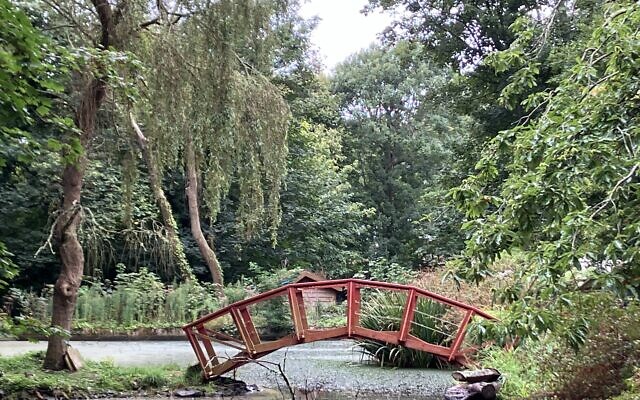
Carrillo learned that during the occupation, the Germans built several labor camps on Alderney. The roughly 2,000 Alderney residents had already evacuated to England; the island was deserted when the Germans arrived. For decades, islanders and members of the international community with interests in laying bare the full extent of Hitler’s atrocities have sought investigations. The availability of modern archeological tools provided the ability to map the area and discover what existed there.

Some of the camps built on Alderney housed forced laborers who did the construction work ordered by the Germans. Laborers were mainly Polish, Russian, Ukrainian and French. They were subject to horrible living conditions and physical torture. Another camp held political prisoners and others who had openly opposed Hitler.
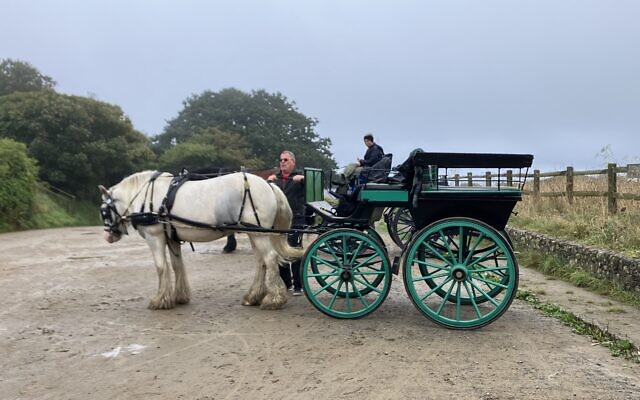
Dell said, “An estimated 1,000 or more captives died from the conditions under which they lived or from punishments inflicted by the Germans. It is believed that over 7,500 prisoners were held there. However, Alderney was not an extermination center. No gas chambers were found. After the war, the British government gave Alderney’s files to the Soviet Union through the UN War Crimes Commission. The USSR didn’t act on the evidence so that most Germans assigned to Alderney escaped trial.”
For other parts of the trip, Carrillo and Dell enjoyed The Isle of Wight (not a Channel Island), two ferry rides away. There they rode a chairlift to view natural cliffs and toured Queen Victoria’s Osborne House. They reported enjoying all the islands because each was different. Sark was rustic, Guernsey was upscale, and Jersey brought them recollections of Nantucket. They toured German bunkers, tunnels, the eerie German Underground Hospital, and the Fort Grey Shipwreck Museum. They visited archaeological sites and shopped the “high” streets, then walked along harbors with coastal views.
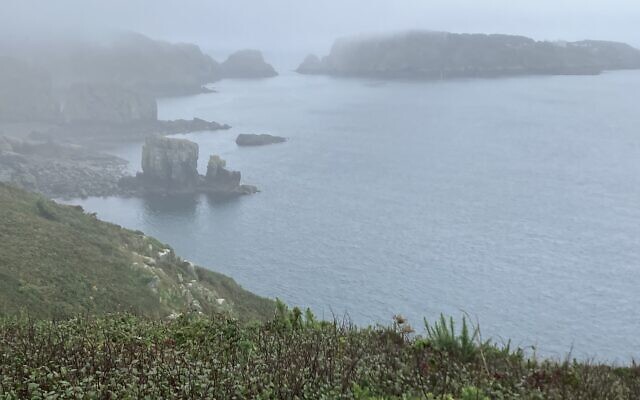
Carrillo concluded, “This trip was ideal if you want a low-key but thought-provoking experience. Tours of the islands started mid-morning and ended in mid-afternoon. There was a lot of walking, but mostly flat surfaces and sites were not far because these are small islands. If you like to be by the ocean, in this case the English Channel, if you like history, if you like natural wonders, if island life interests you, then a visit to the Channel Islands might be the trip for you.”
comments