



Rabbi Josh Hearshen’s Message for Passover 2026
For our Passover holiday issue, we invited members of our staff and community to share their responses.
The prompt for this year’s Passover message is: what does it mean to be a “good Jew”? It is a question that has always troubled me, in part because there is no simple or universally satisfying answer.

As an observant Jew, I take great pride in keeping Shabbat and kashrut, in observing the holidays, and in striving to fulfill the commandments. For me, that is an essential part of what it means to live as a committed Jew. Yet, I hesitate to project that definition onto others or to judge them by that standard alone.
I am also a committed Zionist. I believe that the modern State of Israel is nothing short of a miracle, and that it is something all Jews should support and help sustain. But does that mean that those who do not share that same level of commitment are somehow “not good Jews?” I am uneasy making such a claim.
So, I return to the question: if there is a standard, what should it be?
Perhaps an answer can be found in the figure of the “wicked child” in the Haggadah, who asks, “What is this to you?” The tradition understands this question as one that separates the child from the community. The issue is not doubt or disagreement, but disengagement.
As it is taught in Pirkei Avot (2:4): “Do not separate yourself from the community.” When a Jew sees themselves as something apart from the collective — no longer bound up in the shared story, responsibility, and destiny of the Jewish people — they risk crossing a line from belonging to detachment.

The Jewish people are diverse, layered, and deeply interconnected. There must be room at our seder tables for every Jew who understands themselves as part of this ongoing story — one that begins with Avraham and continues through us today.
We should make space for all who recognize that being Jewish is not incidental, but meaningful — that it is a sacred inheritance we share. And we should hope that all who join us see Israel as a central thread in the fabric of Jewish history and identity, one that has bound our people together since the earliest chapters of Bereshit.
There may be no single definition of a “good Jew.” But perhaps there is a clearer understanding of what it means to step outside the community — when one disengages entirely from the shared identity and destiny of the Jewish people.
This Passover, may our seder tables be open and inclusive, bringing together all who see themselves as part of Am Yisrael. And may we always recognize ourselves as integral members of that enduring collective.
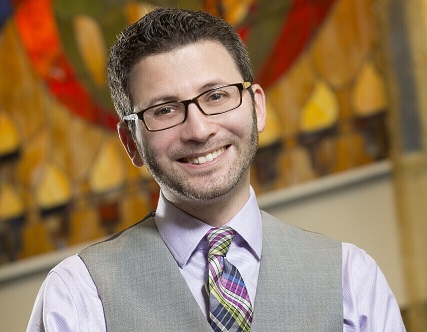
Rabbi Josh Hearshen is the rabbi of Congregation Or VeShalom.
comments