



Making the Move One Step at a Time
For today’s olim, Aliyah is defined not by urgency, but by careful preparation, meaningful choices, and the desire to build a future in Israel.
There is a familiar image of Aliyah: the airport arrival, the flags, the music, the young family stepping off the plane into a waiting, cheering crowd.

It is an iconic moment. But the real story begins long before the wheels touch the tarmac.
For many North American Jews making Aliyah today, the decision takes shape over time, through family conversations, professional planning, school decisions, paperwork, some doubts, lots of excitement, and the slow realization that Israel has moved from being a place they love to a place where they want to build their future.
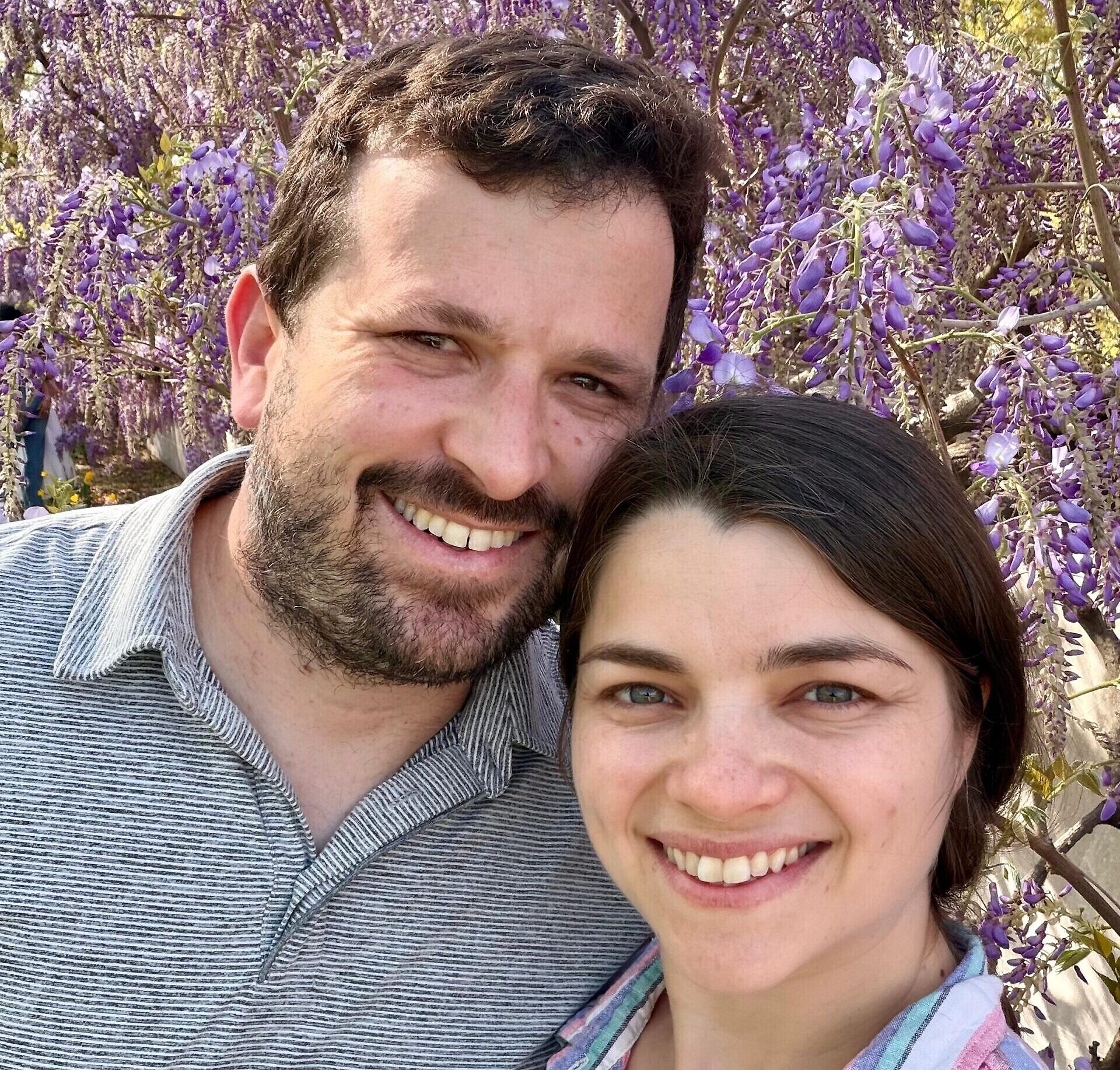
That is how it happened for Amira and Michael Bobrov of Atlanta.
Amira and Michael are both physicians, making Aliyah this summer with their three children. Their connection to Israel is not new. Both attended medical school in Israel, giving them an early experience of living in the country not only as visitors, but as students beginning to imagine their professional futures. Amira’s sister, a pediatrician, has also made Aliyah and is now working in Israel. Through the International Medical Aliyah Program (IMAP), a joint initiative led by Nefesh B’Nefesh in partnership with Israel’s Ministry of Aliyah and Integration; Health; the Negev, Galilee and National Resilience, the Jewish Agency for Israel and bolstered by The Marcus Foundation among others, the support now available to physicians seeking to make Aliyah and enter Israel’s medical system has made the process far more manageable.
For the Bobrovs, then, Aliyah was never a sudden idea. It was always part of the plan. They had spoken for years about moving to Israel a few years after residency, once the timing made sense professionally and personally.

“With my oldest starting first grade, it seemed like the right time for this to become reality,” Amira says, “as the transition will be easier the younger the children are when they move.”
It was not a decision born of dissatisfaction. Quite the opposite.
“We have a wonderful life in Atlanta,” she says, “but it’s time to make Aliyah!”
That combination — gratitude for the life they have built and clarity about the life they want to build next — is at the heart of their decision. They are not running away from Atlanta. They are choosing Israel.
That kind of planning is exactly what Marc Rosenberg, Vice President of Diaspora Partnerships at Nefesh B’Nefesh, recommends, although, he adds, every Aliyah plan has its own story. Each family comes with its own timeline, its own practical questions, and its own set of concerns.
According to Rosenberg, this summer is expected to be a busy Aliyah season, with more than 2,300 North American olim set to arrive. About 60 percent of North American olim typically come during June, July, and August, when school is out and families are already in transition. This year, Nefesh B’Nefesh is coordinating 47 cluster flights.
What makes the numbers striking is not only their scale, but their timing. Over the past two years, Israel has lived through war, uncertainty, sirens, reserve duty, and deep national strain. Yet, Rosenberg says interest in Aliyah has not waned. Since the beginning of the recent war with Iran, nearly 900 Aliyah files have been opened by Jewish North Americans.
For Rosenberg, the most compelling Aliyah stories are not about what people are leaving behind, but about what they hope to build.
The larger story, he says, is not what is pushing people out of North America, but what is drawing them toward Israel: family, values, children, community, and belonging.
“The smiling people getting off the plane are thinking about their future,” Rosenberg says. “They’ve done their research, they’ve spent time here, they have family here. This is a decision they’ve thought about carefully.”
Without a doubt, Aliyah has become much easier today than ever before. Aliyah today is supported by an infrastructure that simply did not exist generations ago. Through the partnership between Nefesh B’Nefesh, Israel’s Ministry of Aliyah and Integration, the Jewish Agency for Israel, Keren Kayemeth LeIsrael, and Jewish National Fund-USA, prospective olim have access to guidance, resources, and support at every stage of the journey.
The larger story … is not what is pushing people out of North America, but what is drawing them toward Israel: family, values, children, community, and belonging.
But just as important is the community that has already paved the way. Nearly 100,000 North Americans have made Aliyah through Nefesh B’Nefesh, meaning many newcomers arrive to find family members, friends, and familiar faces already building lives in Israel. For many, that network transforms Aliyah from a leap into the unknown into a natural next step.
For Amira, the most exciting part of Aliyah is imagining what life will look like not only on arrival day, but one year later.
“My vision for this time next year: we will be settled and where we want to be,” she says. “The children will speak Hebrew and have friends. My husband and I will have jobs and a social network.”
At the same time, she is realistic about the work it will take to get there. Packing up a house, helping children integrate into a new society, and working in Hebrew all feel daunting. For physicians, even familiar professional skills must be adapted to a new language, a new system, and a new medical culture.
But that, too, is already becoming part of the preparation. “Medical Hebrew classes through Nefesh B’Nefesh have been a big confidence booster,” Amira says.
Today’s olim are not arriving with unrealistic expectations, but for many families, the challenges are part of a larger decision to build a life of meaning and belonging.
For Amira, that decision is rooted in the kind of connection she wants her children to have with Israel. “I believe that creating a core relationship with Israel — mastery of the language, strong social connections, and participation in society — will better prepare my children for facing outside criticism than anything could in America,” she says.
She also hopes that Jewish life will become less dependent on deliberate religious practice and more woven into the fabric of everyday life. In Israel, Jewish time, Jewish language, Jewish history, and Jewish responsibility are not only taught; they are lived.
Still, Amira is clear that Aliyah is not about escaping a lack in Atlanta.
“Honestly, I have a wonderful life in Atlanta,” she says, “but I feel a calling to participate in and contribute to Israeli society.”
That may be the clearest expression of the new Aliyah story: not a rejection of one home, but a pull toward another; not a move driven by fear, but by responsibility, connection, and the desire to take part.
comments